Builder Gel Nails: A Beginner’s Guide to What It Is, How It’s Applied and How to Remove It
If your natural nails bend, split, or break just as they reach a length you like, you have probably heard builder gel nails mentioned as the fix. It is one of the most searched-for nail treatments for a reason: it strengthens the nail you already have, rather than replacing it with a tip or an extension, and it can be worn on its own or under polish.
This guide explains builder gel nails from the start — what the product is, how a set goes on, what BIAB means, how removal works, and whether it is a good fit for your nails — so you can decide before you book a salon visit or buy a kit.
Table of Contents
What Are Builder Gel Nails?
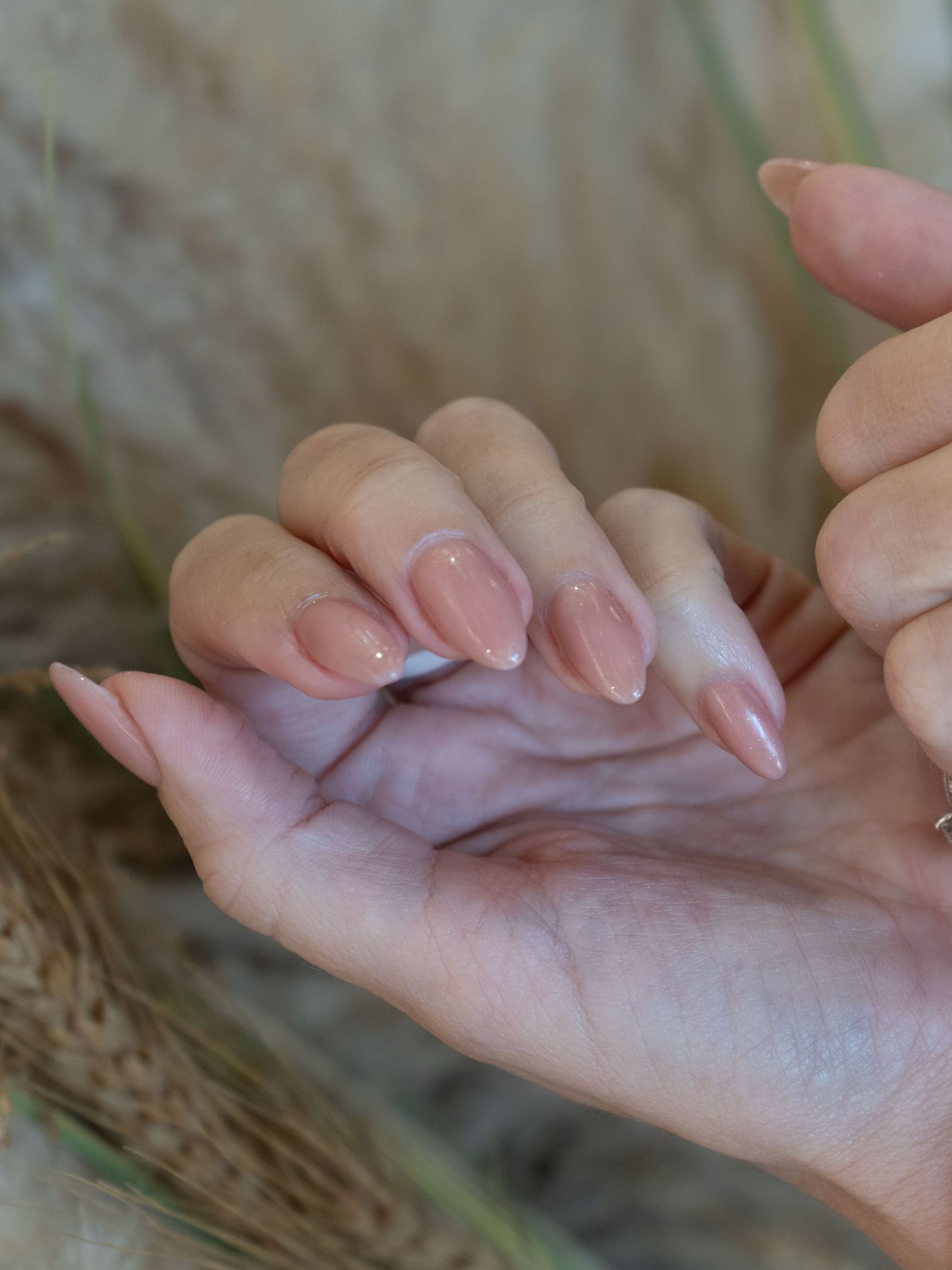
Builder gel nails are nails strengthened with a thick, brush-on gel that is applied to the natural nail and cured under a UV or LED lamp. The gel self-levels into a smooth layer, adds thickness and strength, and is shaped on the nail itself. It can be worn as a clear overlay, as a base for polish, or built out a little further for extra length.
The key idea is simple: the product is shaped on your nail, not stuck on as a ready-made piece. The person applying it controls how thick it is, where the strength goes, and what shape the nail ends up. That makes it flexible — a thin overlay for someone who just wants their nails to stop bending, or a thicker layer for someone who wants a bit of length as well.
What Is Builder Gel for Nails?
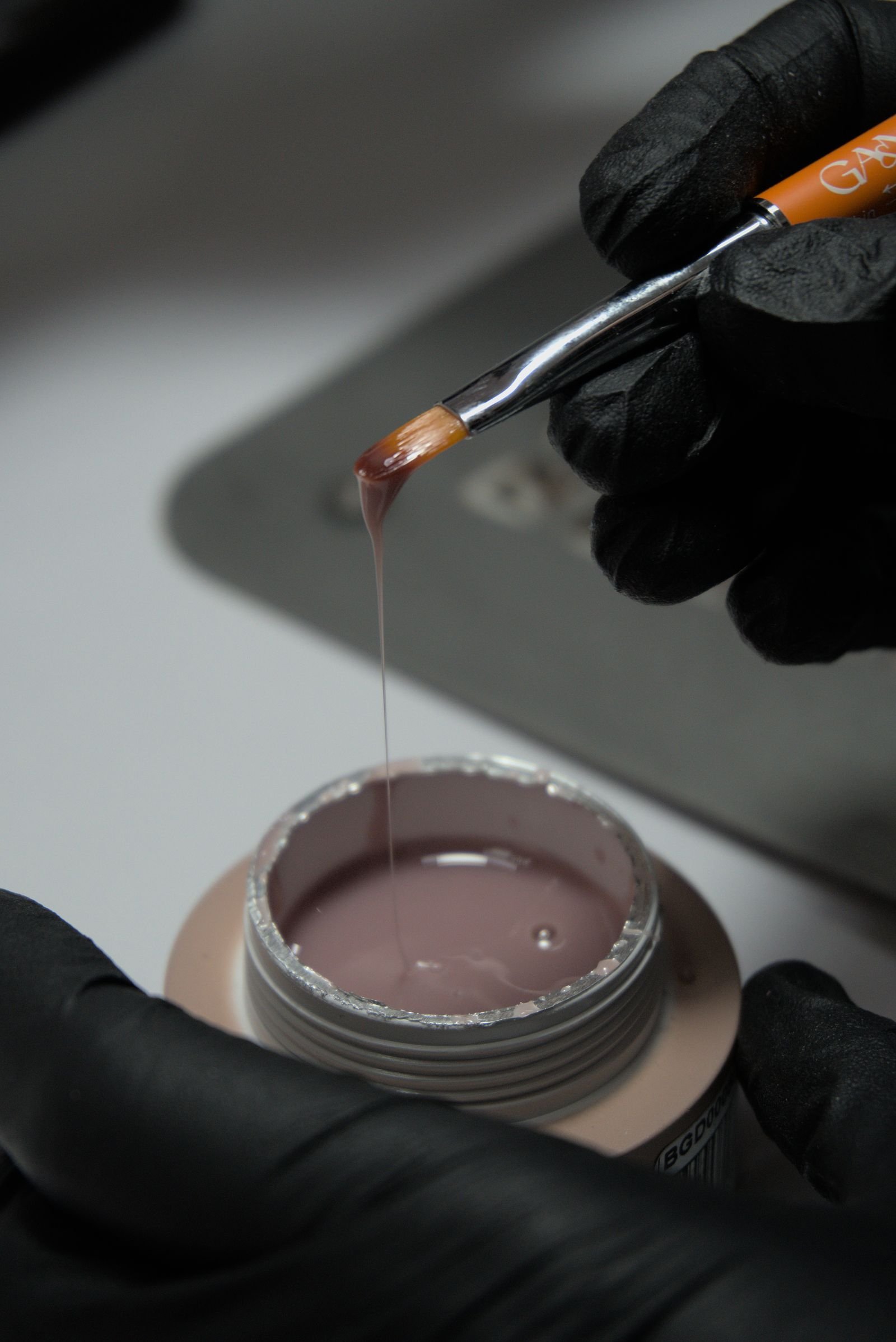
Builder gel is the product itself: a thick gel, usually in a bottle with a brush or in a pot with a separate brush, that hardens only when cured under a lamp. It is thicker than regular gel polish, which is why it can add real structure rather than just colour. It is different from hard gel in that most builder gels are made to soak off, though some need more filing first — check what your product says rather than assuming.
It is also different from acrylic. Acrylic is a powder-and-liquid system that hardens in the air; builder gel is a gel system that hardens under a lamp. They can give a similar look, but the application, the smell, and the removal are different, and a salon that offers one does not always offer the other.
What Does BIAB Mean?
BIAB stands for builder in a bottle. It is the same kind of thick builder gel, sold in a bottle with a brush built into the lid, so it applies much like polish. When people say BIAB, they usually mean a builder gel overlay on natural nails, often in a nude or sheer shade. It is a format and a shorthand, not a different product family — if a salon menu says BIAB and another says builder gel overlay, they are usually describing the same service.
How Are Builder Gel Nails Applied?
A builder gel set follows the same order whether it is done in a salon or at home, and the prep at the start matters more than any other step.
Prep. The cuticles are pushed back, the nail surface is lightly buffed to remove shine, and the dust is wiped away. A dehydrator and primer go on if the product calls for them, and they need to dry fully. Gel does not bond well to an oily or shiny nail, and most lifting starts here.
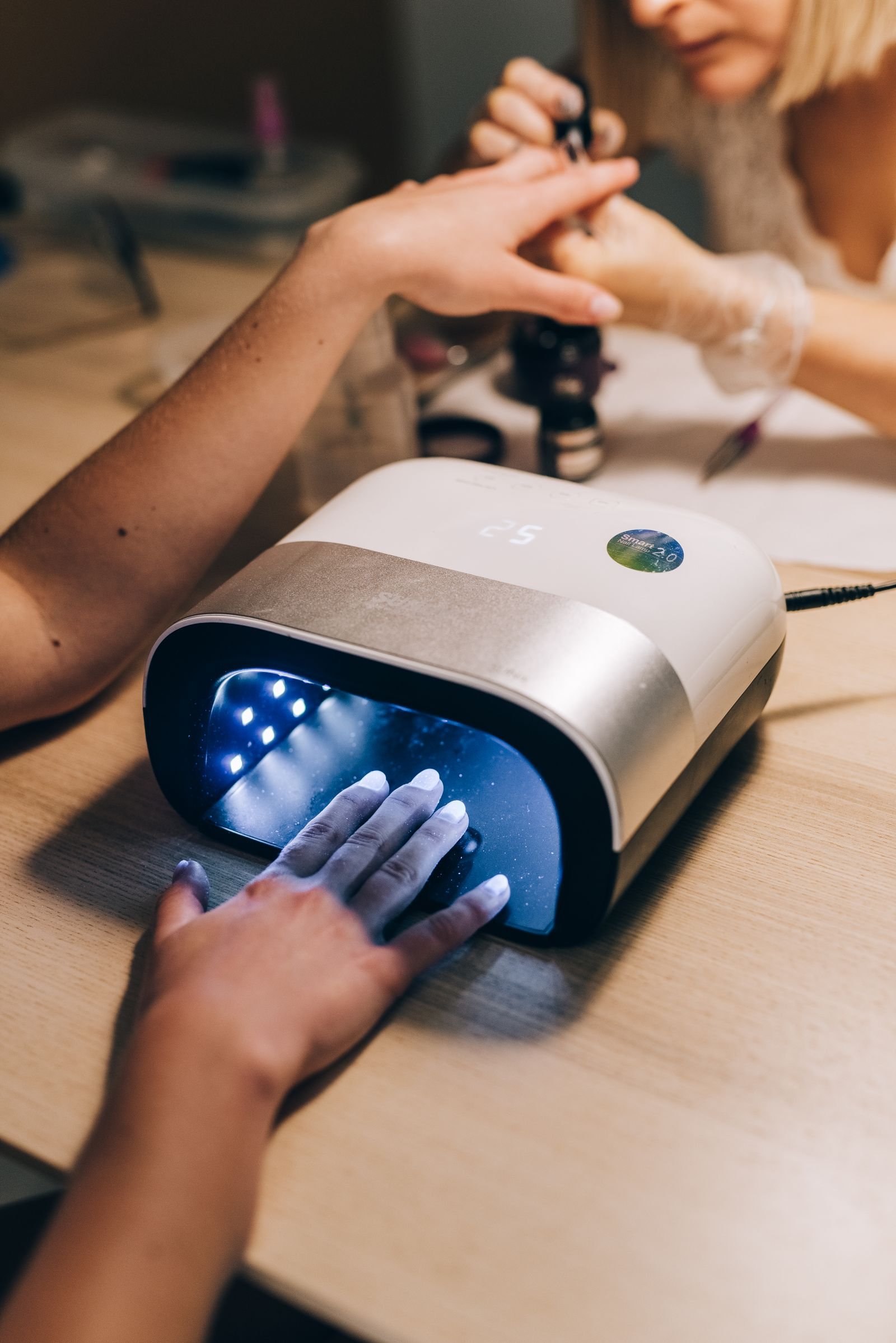
Slip layer. A very thin layer of builder gel is brushed on, almost like polish, and cured under the lamp for the time the product states. This thin layer is the bond between the nail and the thicker layer that follows.
Building layer. A small bead of gel is placed near the centre of the nail and guided gently toward the cuticle and the tip, keeping it off the skin. The thickest point sits near the middle of the nail, where the strength is needed, tapering thinner toward the tip and the cuticle. Each layer is cured before the next goes on, and a second thin layer is added if the first still looks thin in places. Two thin layers beat one thick one, because thick coats can stay soft underneath even when the surface feels cured.
Shaping and finishing. Once the final layer is cured, the sticky layer is wiped off if the product instructions say to, and the shape is refined with a file — the sides, the free edge, the surface if there is a bump. Polish goes on if you want it, then a top coat, curing each layer as the products direct.
The full step-by-step version, written for doing it at home, is in the how-to-use guide. The comparison guide looks at how this differs from the tip-based Gel-X system.
Builder Gel Nails vs Regular Gel Polish
The simplest way to think about builder gel nails is to compare them with the gel polish most people already know. Regular gel polish is thin: it adds colour and a glossy finish, and a little protection, but it does not add structure. Builder gel is thick: it adds strength and thickness, and it can change the shape of the nail slightly by building up the centre.
That difference decides which one fits. If your nails are already strong and you just want colour that does not chip, gel polish is enough. If your nails bend and break, or you want an overlay that holds its shape, builder gel is the one that adds something structural. The two are often combined — builder gel underneath, gel polish on top — which is why a set can look like an ordinary gel manicure while feeling much stronger.

Are Builder Gel Nails Good for Your Nails?
This is the question people ask most, and the honest answer is that it depends more on how the gel is applied and removed than on the gel itself. A thin overlay, applied to a properly prepped nail and removed with a soak, does not have to damage the nail underneath. What damages nails is usually the removal: peeling a set off, scraping at a patch that will not move, or filing into the bare nail after the gel is gone.
There are a few situations where it is worth pausing. If your nails are already sore, splitting, or lifting away from the nail bed, covering them with another set is not the fix — let them recover first. If you have had a reaction to gel products before, such as itching or redness around the nails, that is worth mentioning to a salon or a doctor before another set, not covering up. And if a set lifts at the edge, get it fixed or take it off properly; a lifting edge lets water in under the gel, and that is what leads to the greenish staining people worry about.
Is Builder Gel Bad for Your Nails?
The same logic applies in reverse: builder gel is not automatically bad for nails, and it is not automatically harmless either. The product itself is one part of it. The prep, the thickness, the cure, and above all the removal are the parts that decide how your nails come out of a set. A set that is soaked off gently leaves the nail underneath largely as it was. A set that is peeled off takes thin layers of nail with it, and that damage then gets blamed on the product. If your nails feel thin or sore after a set, the removal is the first thing to look at.
How Do You Remove Builder Gel Nails?
Builder gel nails removal is a soak-off, with filing first. The top coat and some of the gel surface are filed down so the acetone can get in, then each nail is wrapped in acetone-soaked cotton and foil until the gel softens enough to push off gently with a wooden stick. If a patch will not move, it gets soaked again instead of being forced. Peeling is the one thing to avoid: gel bonds to the top layer of the nail, so peeling takes nail with it.
Some harder builder gels need more filing and a longer soak than softer ones, so the exact effort depends on the product. The full method, including aftercare and the no-acetone option, is in the gel polish removal guide — the steps are the same, and builder gel usually just needs more filing first because the layer is thicker.

Who Builder Gel Nails Suit Best
Builder gel nails suit people whose main goal is stronger natural nails rather than instant length. It works well for short-to-medium nails that bend or break, for people who want the option of infills as the nail grows out, and for people who like their own nail shape and just want it to hold up better. It is also a good starting point for someone new to gel systems, because there is less to take off at removal time than with a full extension.
Builder gel nails suit less well if you want long nails straight away without any shaping, or if you change your length often and do not mind a fresh set each time — those are the situations where a tip-based system has the edge, and the comparison guide walks through that choice.

Frequently Asked Questions About Builder Gel Nails
What is builder gel for nails?
Builder gel is a thick, brush-on gel that is applied to the natural nail and cured under a lamp. It adds strength and thickness, and it can be worn as an overlay, as a base for polish, or built out for a little extra length.
What is the difference between builder gel and BIAB?
BIAB is builder in a bottle — the same kind of builder gel in a bottle with a brush. It is a format, not a separate product, and it usually means an overlay on natural nails.
Can you do builder gel nails at home?
Yes, with a lamp and a bit of practice. The first set is usually the slowest, because the shape is made by hand and the layers need to stay thin. The how-to guide covers the steps in order.
Do builder gel nails need infills?
They can usually be infilled as the nail grows out, because new gel bonds to the old layer. Whether that is offered depends on the salon and the product, so it is worth asking before a first set.
How do I take builder gel off without damaging my nails?
File the surface, soak with acetone-soaked cotton and foil until the gel softens, and push it off gently with a wooden stick. Do not peel or scrape. If a patch resists, soak it again.
The Short Version: Builder Gel Nails
Builder gel nails are your own nails, made stronger: a thick gel brushed on, shaped on the nail, and cured under a lamp. It suits people who want strength more than instant length, it can be infilled as it grows out, and it comes off with a soak, not a peel. Get the prep right, keep the layers thin, and take the set off gently, and your nails will come out of it in much better shape than if any of those steps is rushed.


One Comment